
MICROBES-4-CLIMATE Project 2nd General Assembly
February 19, 2026
February 3, 2026 - February 5, 2026
Location
Braga, Portugal
Meeting Report
The EU-funded Microbes 4 Climate (M4C) project held its 2nd General Assembly (GA) in Braga, Portugal, on February 3-5, 2026. The three-day event brought together representatives from the 31 consortium partners from across Europe for collaborative workshops, training sessions, and strategic planning aimed at advancing the project’s mission of leveraging microbiomes for climate action.
Isabelle Caugant, Communications Director of the Phytobiomes Alliance and consultant for the U.S. Culture Collection Network (USCCN), attended as a project partner and participated in consortium discussions.
The goals of the MICROBES-4-CLIMATE project are to:
- Harness microbial and microbiome research to develop solutions for climate action
- Provide Transnational Access (TNA) to research infrastructure and expertise across Europe
- Build capacity among consortium members through training and knowledge exchange
- Foster collaboration between European microbiome research projects and international partners
The three days were structured around complementary themes.
 Day 1 focused on project troubleshooting and strategic communication, including a review of Reporting Period 1 feedback, and an overview of the first and second Transnational Access (TNA) calls, followed by a presentation on communication and dissemination best practices. Working sessions from WPs 1-4 enabled detailed technical discussions and collaborative problem-solving.
Day 2 was dedicated to capacity building, with specialized training sessions led by WP5, WP6, and WP7 teams, equipping partners with advanced methodologies and best practices critical to the project’s scientific objectives. The day concluded with a keynote by Tanja Kostic from the EU-funded MICROBE project.
Day 3 featured joint sessions between M4C and the MICROBE project, with discussions centering on best practices for microbiome biobanking, sample preservation and sharing protocols, Ethical, Legal, and Social Issues (ELSI), and potential short-, mid-, and long-term collaboration opportunities between the two projects.
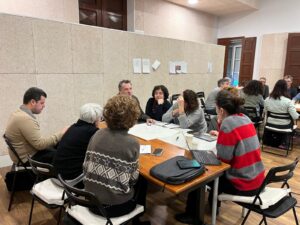 A key feature of the General Assembly was its emphasis on continuous improvement and inter-project learning through structured reflection sessions, enabling partners to evaluate progress, share lessons learned, and identify areas for refinement.
This meeting strengthened the connection between the U.S. Culture Collection community and European microbiome research initiatives, and reinforced the relevance of ongoing transatlantic collaboration in building robust microbiome research infrastructure for climate solutions.